Is Hype Studies just Sociology of Expectations 2.0?
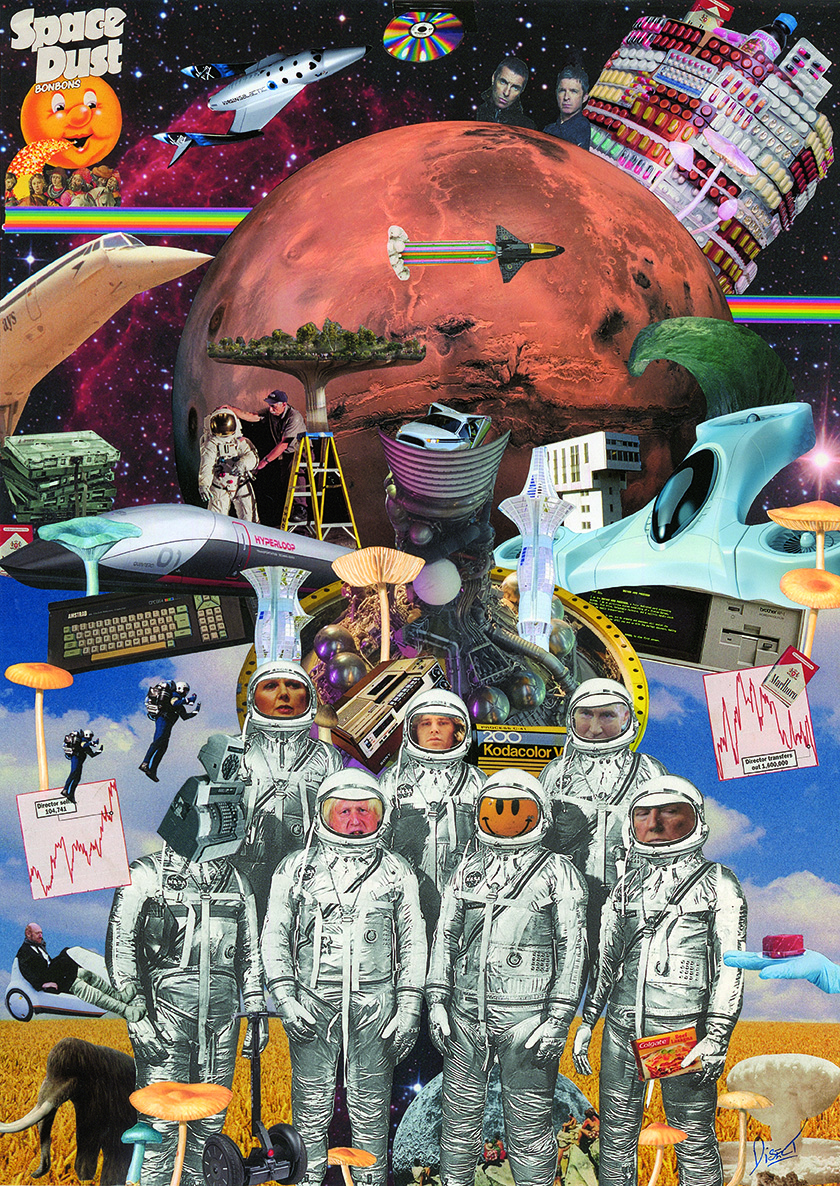
In reflecting on my personal journey with Hype Studies, I couldn’t help to notice a sense of collective excitement over not only this direction of research but also the practice of co-creating something new, be it a social movement, a theory, or a field. In other words, we have become a subject of our own meta-hype (indeed, this has been a running joke of many meetings over the past several months!). Therefore, it’s not a surprise that among this growing group of mostly enthusiastic individuals, there are a few quieter voices which–purposefully or not–manage to pop our Hype Studies bubble. On occasion, I get asked “isn’t Hype Studies basically the same as Sociology of Expectations?” or “is the concept of hype the same as expectations, marketing or promises?”. And while I’ve always had a tacit sense that Hype Studies is doing “something different” while attempting to acknowledge its intellectual heritage, I’ve yet to articulate this difference to those rightfully challenging us!
In this post, you will find my attempt to briefly outline our overlaps with Sociology of Expectations (SoE) while also stating how we depart from each other. I need to caveat that I wasn’t around in academia when Sociology of Expectations first took shape. I haven’t interacted with its core authors directly, either. My views presented below are hence personal and entirely based on my interpretation of the available literature as well as my experience of ‘behind the scenes’ of Hype Studies.
Sociology of Expectations as the legacy we inherited
Sociology of expectations is a field of research with its origin dating back to the 1990s/ early 2000s, primarily established and then popularised by a group of scholars like Harro van Lente, Kornelia Konrad, Nik Brown or Mads Borup. Despite its name, Sociology of Expectations is neither limited to sociology, nor to expectations. Rather, it takes an umbrella of future-related terms as its core interest: “As such, future-oriented abstractions are among the most important objects of enquiry for scholars and analysts of innovation”. SoE papers have been occupied with concepts like promises, visions, imaginaries and, of course, hype.
When it comes to its disciplinary identity, in my view, it has been an attempt to inject sociological (and STS-ish) sensibility into traditionally positivist branches of innovation studies. The journals hosting SoE position papers, namely, “Technological Forecasting and Social Change” and “Technology analysis and strategic management” are not core sociology journals, even though they’re friendly to their constructivist cousins.
Who then engages with Sociology of Expectations? I did a manual skim of publications citing the main SoE papers to give you a sense of the diversity of influence. To give you an idea of how far reaching (academically speaking) the ideas from SoE are, let me share just a small sample of journals citing that work: Journal of Business Venturing, Public Understanding of Science, Science and Public Policy, BMC Medical Ethics, AJOB Neuroscience, Geoforum, Futures. Same goes for the antecedents of the SoE, with Borup et al. claiming “the disciplinary composition of contributions to the expectations literature is however much more varied drawing on fields as distinct as economics, sociology, the history and philosophy of science, as well as STS” .
We can also identify the SoE research agenda, articulated through several special issues and working papers. To my best knowledge, there is no specific event, or publication claiming the SoE as ‘theirs’. Then again, in the early 2000s, I was just a kid pirating mp3s through soulseek with no connections to academia. Without further digressions, here is how I understand the core tenets of Sociology of Expectations:
- Expectations are performative: they influence what gets attention, funding or priority in policy.
- Expectations are characterised by temporal dynamics: hype often comes with disappointment and amnesia, both requiring careful management by the relevant actors.
- Expectations literature deserves case-specific empirical attention: from hydrogen, through biomedicine and nanotechnology, each of these tells a unique story of innovation.
That said, I’m pretty sure I’ve heard very similar statements during various conference presentations by the members of Hype Studies group. So, are we repeating the SoE gospel or contributing something new?
What is different about Hype Studies?
While we recognise academic overlaps between SoE and Hype Studies, we also take quite a different course of action. I can characterise it with three core ambitions: 1) part research, part engagement project; 2) a new generation trying to do things differently; 3) acid-coded politics and aesthetics.
Part research, part engagement project
From the outset, our vision has been outward facing, in addition to the existing academic work we are already engaged in. Although most of us met through conferences in the field of Science and Technology Studies, we keenly engage with journalists, artists, designers, activists or tech workers. As a part of the inaugural Hype Studies conference in 2025, we hosted an exhibition space featuring over 25 artists; video screening sessions, and we have also hosted a workshop by a renowned investigative journalist, Christo Buschek. Ultimately, our mission is to promote hype literacy in the society: ensuring that members of the public, commentators and politicians are equipped with tools to hold better conversations about the dynamics of innovation. This is now particularly important as now “hype is entering the age of badness”, to borrow a phrase from Gemma Milne.
A new generation trying to do things differently
While I’m personally not precious about coming up with the most citable definitions or gatekeeping whose concept belongs to what field, to us, Hype Studies is an opportunity to experiment with progressive models of self-governance. Our website states: “We strongly believe that our generation does not have to reproduce the hierarchical, extractive and exclusionary patterns of work commonly found in academia and cultural institutions. Our salaries and job titles do not define our roles within these communities. Whenever possible, we offer resources to enable participation to all. We are keen on disseminating our research in non-commercial open-access publications as well as formats accessible to a range of people outside academia”. Most of us had bad experiences with unaffordable conferences, profiteering publishers or a lock-in within the “big tech” tools our employers subscribe to. Since our expertise is literally concerned with politics of technology, why should we passively accept our own working relationships with technology?
Acid-coded politics and aesthetics
The final point relates to our “vibe”, something that I’ve only recently found the language to describe in more explicit terms. The late Mark Fisher’s term “acid communism” neatly captures our aspirations. Not that we’re parading with hammer and sickle while singing Lucy in the Sky with Diamonds! I understand “acid communism” as attempt to think through what the society should look like once it escapes Capitalist Realism, or the notion that there is no alternative beyond capitalism.
Hype Studies understand that futures can be weaponised as spectacle, leaving the audience in the state of capitalist realism, lingering for awe and popcorn.
In addition to a project of critique, Hype Studies then becomes a project of construction. Coming back to the first point on engagement, we stress that consciousness expansion requires tools which go way beyond logical argumentation, so prevalent in academia. That’s why we’re so keen to lean into the irrational, emotive and dramatic properties of hype through our own aesthetics as well as collaboration with artists (see, for example, this fantastic video on AGI hype by Tara Monheim, Maria Antunes and Rut Escuer!). We hope to subvert, if not reclaim the “mood” hypers are constantly subjecting us to. We acknowledge that hype is about emotions and drama: that expectations are not only about truth values and epistemic properties, but about entertainment and maybe even bullshit (in Harry Frankfurt's understanding of the term). Hype Studies understand that futures can be weaponised as spectacle, leaving the audience in the state of capitalist realism, lingering for awe and popcorn.
Taking this discussion further…
While I’ve used this platform to offer my comparison of Hype Studies and Sociology of Expectations, it is by no means a finished discussion! We will continue the conversation at the upcoming EASST (European Association for the Study of Science and Technology) conference in September 2026, Kraków. Together with Vassilis Galanos, Neil Pollock and Robin Williams, we are organising a roundtable “Hype Studies, meet STS; STS meet Hype Studies”. During the event, we will aim to bring established as well as emerging voices into a conversation about hypes’ histories and futures. So far, the confirmed speakers include Kornelia Konrad, Harro van Lente, Jacek Mańko, Jack Stilgoe and Gemma Milne. We’ll also put together a social – more details closer to the time :). For those who aren’t planning on attending the event, we will be sharing a written event summary on our website. See you in Kraków!
| Bio: Ola is one of the organisers of the Hype Studies group as well as our inaugural conference which took place in September 2025 in Barcelona. She researches the intersection between maintenance and innovation in domains like cyber security, energy or digital twins (or the combination of all of the above!) |