On hopewashing, or the cooptation of Solarpunk futures
Like many academics in STS and related fields, I spent much of last year writing about artificial intelligence and, inevitably, I was grappling with the concept of hype. As a scholar interested in anti-capitalist movements and their engagement with technology, I was specifically intrigued by how AI hype is being actively contested. I wanted to explore the alternative visions of the future thriving among communities that refuse to buy into the bullshit.
Fittingly, I titled my presentation for the inaugural Hype Studies conference “Contesting AI Hype Through Solarpunk Imagination and Practice.” For the empirical portion of this research, I drew on interviews conducted with a movement network of Italian tech activists, organizers, academics and journalists, including participants from environmental and transfeminist movements, Italian social centers and political collectives, free software and Fediverse activism, as well as union-like organizations such as Tech Workers Coalition. My goal was to investigate the prevailing imaginaries about AI and its futures within this movement network. Were they buying into the AI hype? Were they seeing straight through it and rejecting it outright? Or were conflicts emerging from competing approaches to engaging with it?
First, I found that the network was actively contesting AI hype by diagnosing its core problem: a discursive bundle of inevitability, arms-race lock-in, urgency, sublimation, fascination, and terror. Mythical, magical, and entirely apolitical narratives obscuring the very real, concrete problems of existing AI—extractivism, resource intensiveness, automated warfare, potentially catastrophic financial speculation, unclear cognitive effects, enshittification, and gender-based violence—all in the name of a wonderful, yet incredibly blurry, AI future.
Second, these activists were not boycotting AI tout court. Instead, they were tinkering with it in ways they deemed useful and acceptable, such as for coding, while experimenting with strategies to mitigate its harms, like deploying small, specialized, open-source models hosted locally. They were also trying to envision what AI would look like in a desirable world: defining the spaces where it should (and should not) be accepted (i.e., checking grammar: yes; reviewing work performance: no), and determining how its innovation must be directed to help realize a post-scarcity, post-wage future. The predominant discourse within this network was fundamentally reversing the technological determinism of AI hypers. It stressed the necessity to engage with technology through critique, an ethics of care, slower pacing, small-tech principles, careful attention to materiality, and a hacker/tinkerer ethos that deflates any magical thinking. Borrowing a term that frequently surfaced in the interviews, I have labeled this set of practices and ideas the “Solarpunk AI Imaginary.”
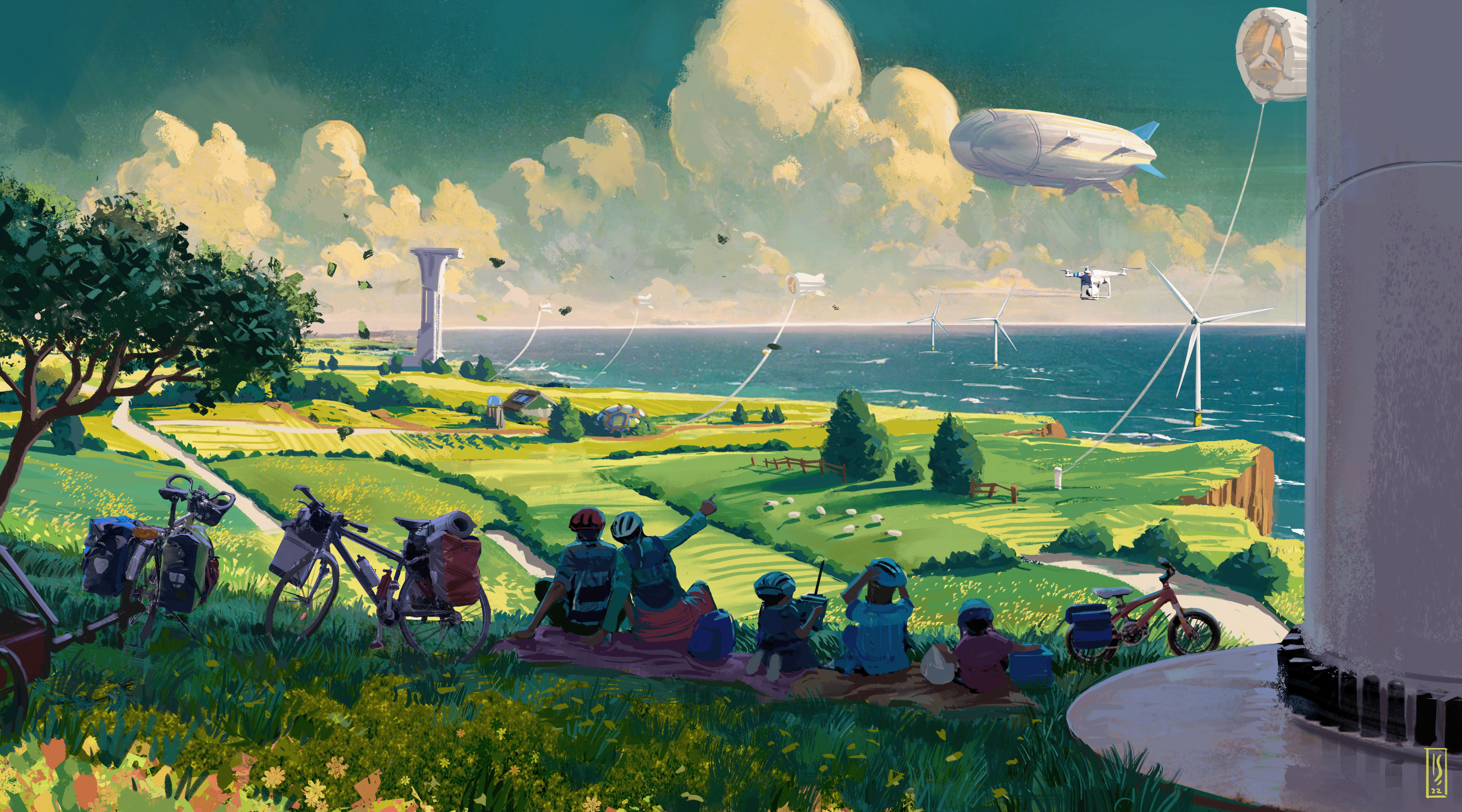
If the TESCREAL TechBroTopia project provides the ideological scaffolding for the brand of Big Tech anarcho-capitalism currently on the rise, the Solarpunk imaginary emerged as a counter-cultural counterweight: a way of thinking about technopolitics through a radical, ecological, and anti-capitalist lens. Initially spreading organically as a distinct aesthetic across blogs and platforms, it became a literary genre in 2013 with the publication, in Brazil, of the first Solarpunk anthology, and went on to establish itself as an international artistic and political movement in the years that followed. As the Solarpunk Italia manifesto explains, it is both an aesthetics and a movement which expresses "a complex and open, but clear, political vision: inclusive, feminist, ecologist, utopist, anarchic, organicist. Anticapitalist, antiracist, antipatriarchal, antispecist.". I frequently observed the Solarpunk imaginary coming up during the deliberate efforts of environmentalist movements attempting something exceedingly difficult—giving plasticity to a hopeful future. It is a label that aptly describes a grounded trajectory towards a good future, one that begins with the desire for a better state of things but refuses to believe it will magically materialize through this or that technological fix. Instead, Solarpunk operates on the assumption that political action is required to achieve it.
Can you find hope in the fridge aisle?
Now, this is where I will stop talking about AI (I bet everyone is sick of it anyway) and pivot to a more interesting and urgent topic that surfaced during the discussion of this paper—one that, somehow, has to do with yogurt. What happens when brands go: "yay! Solarpunk!"? Is the corporate co-optation of alternative imagination its death sentence? When I introduced the concept of the Solarpunk AI Imaginary at my presentation during the Hype Conference, in a panel about resistance to hype and alternative futures, an audience member rightfully questioned whether Solarpunk retains any radical value at all, and whether it remains useful to the cause of post-capitalist environmental justice. As the corporate marketing machine inevitably co-opts and dilutes nearly every emergent form of creativity and counterculture I have ever loved, it is a haunting and highly relevant question that stuck with me.
Let’s examine the problem with the present example. A quick Google search for the term “Solarpunk” immediately yields illustrations from an ad campaign of the US-based food company Chobani. These images come from a series of videos depicting joyful, diverse communities sharing a meal against a backdrop of pristine green hills, where high-tech water mills turn and unobtrusive wind farms power villas overlooking vibrant fields. They immediately evoke the Studio Ghibli animation style that, before being shamefully appropriated by a GenAI trend, has inspired Solarpunk aesthetics with movies like Princess Mononoke and Nausicaa Of The Valley Of The Wind.
This is what Gerola and Robaey term the “elite capture of imagination.” We are all familiar with greenwashing: major polluters—from fast fashion brands to massive oil conglomerates—spend millions marketing a professed commitment to solve the climate crisis by co-opting activist imagery and jargon. However, the concept of elite capture of imagination points to something slightly different and insidious: the neutralization of the radical value inherent in DIY, grassroots cultures once they are captured by powerful actors who possess the resources to iterate on them better and faster.
Frankly, it takes a lot of scrolling to find independent Solarpunk artwork as beautiful and inspirational as this yogurt commercial. The campaign illustrates exactly what a Solarpunk utopia might look like: a gorgeous, ecologically sustainable, technologically integrated, and egalitarian future. What a wonderful—and wildly ambitious—prospect for a dairy company!
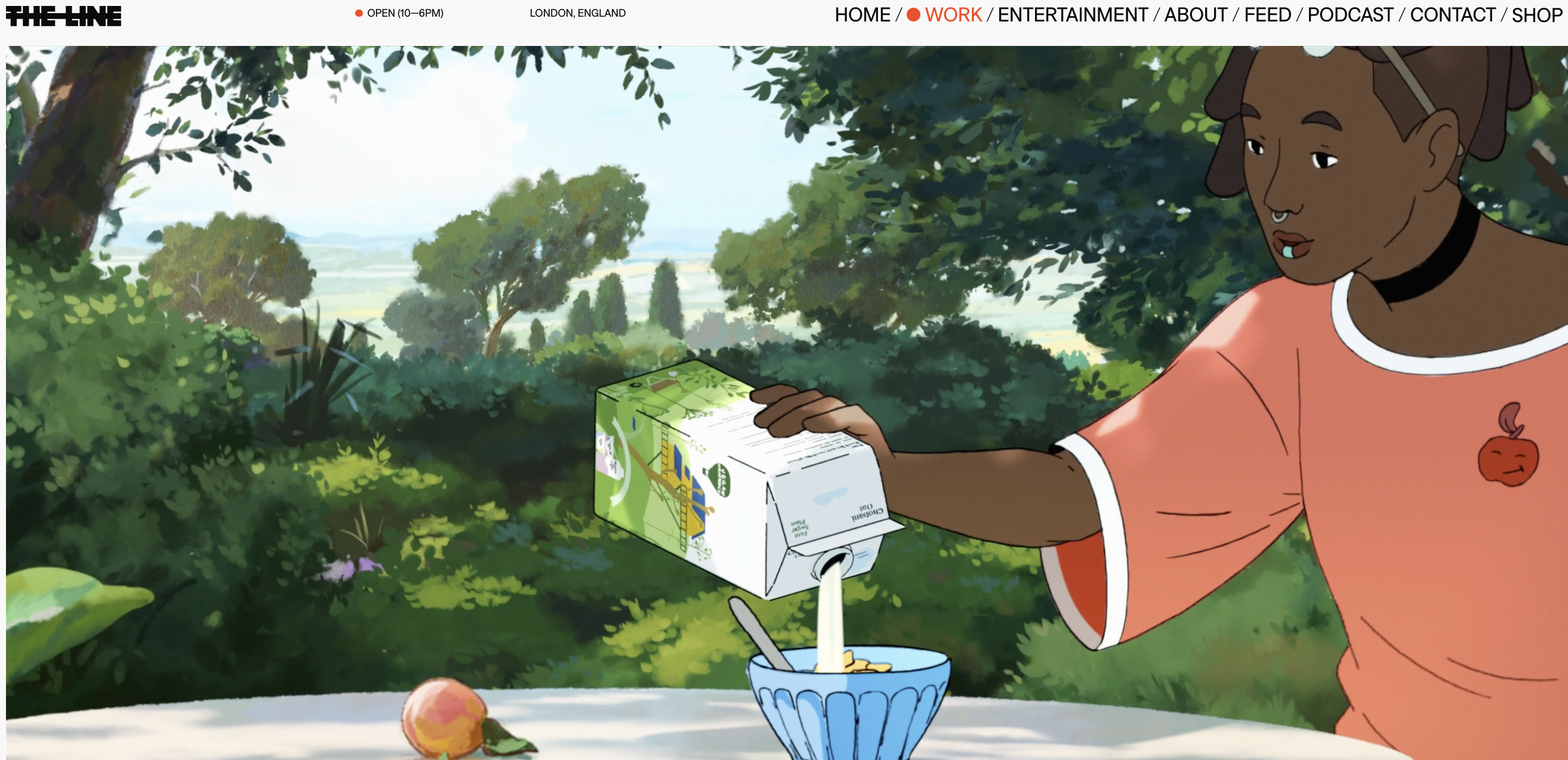
I am genuinely glad these videos exist, and they leave me wanting to see more of them. Can we really call them Solarpunk, though? I understand the appeal; they showcase beautiful, hopeful futures. What they are far less willing to share, however, is the scarier but equally essential component of the Solarpunk manifesto: the knowledge that, in order for us to actually achieve those futures, deep social and political transformations must occur.
I personally sense a cynical, violent humor that is the byproduct, even if not the intention, of these types of ads. Hope for utopia is not inherently naïve; under the hegemonic paradigm of capitalist realism, it is a political stance. I, too, would love to eat a wholesome organic stew prepared by my friends, leaving the dishes to a solar-powered robot, while we breathe clean air. Consequently, I don’t blame the artists who conceptualized the campaign for allowing themselves to dream and lean into that desire. There is nothing wrong with asking, as they did: “What if we created a future for ourselves that was full of optimism and positivity?”
At the same time, I know such a future is currently impossible. Or, more precisely: if we don’t want it to remain accessible only to a handful of billionaires—who will make a lame, tacky version of it anyway—something has to happen. And here is where the dark humor of corporate appropriation kicks in: this incredible, positive scenario, so lovingly crafted, pops up as a commercial while I doomscroll through a present defined by war, ecological devastation, technofascism, and genocide. This is slicker and meaner than greenwashing; it is hopewashing. It is the equivalent of flaunting a tasty treat, with no recipe or ingredients attached, in front of a hungry, hungry person, and going “See? It’s beautiful! Feel good!”.
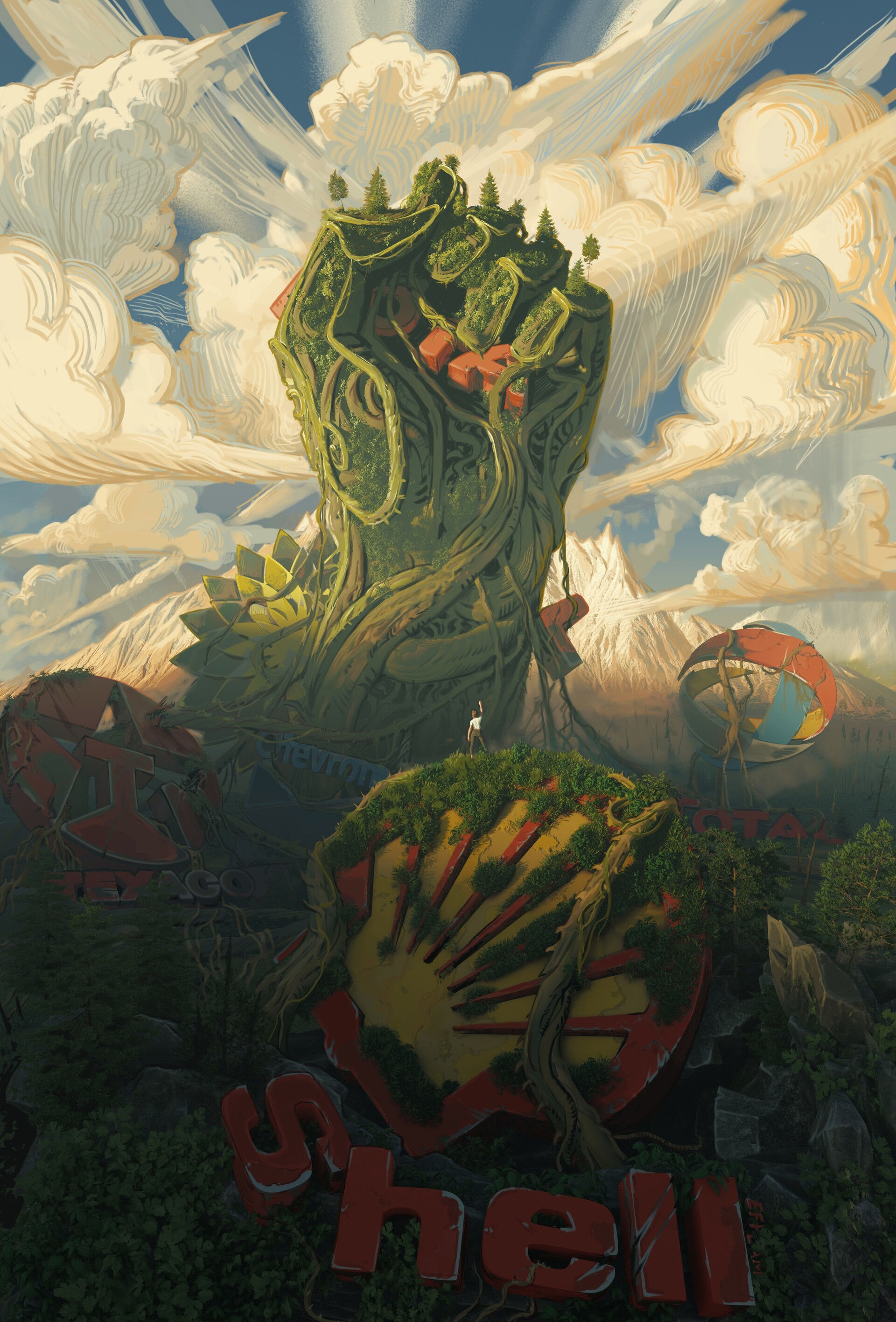
Returning to the original question, this is how, at least in my hopes, the imaginary can retain radicality: when it is appropriated by marketing, it is obviously and irritatingly hypocrytical. If it's not anti-capitalist, it can be said to "be Solarpunk" in a cosmetic way at best. But in the spirit of its -punk suffix, appropriation will be turned back on itself. As this decommodified version of the same advertisement shows, if you make something beautiful for profit, a punk will find a way to make something better and politically eloquent out of it. When it is not extirpated from its original context within anti-capitalist climate struggle, the hopeful future ceases to be a mere virtual treat. Instead, it becomes a concrete objective, and political action becomes the recipe to achieve it. When Solarpunk operates in its element, which is politics, it can actually inspire to take action.
if you make something beautiful for profit, a punk will find a way to make something better and politically eloquent out of it!
There is another thing that gives me hope for the future of Solarpunk as an authentic, radical imaginary: this hopeful aesthetic is already falling out of fashion in the mainstream. The conjuncture has shifted, and brands have abandoned their facade to reveal their subservience to power. Remember when gen z was treated as the Fridays for Future, soft, woke generation? Well, marketers quickly stopped caring about them the moment they started wearing keffiyehs and hoisting the Straw Hat Pirates' flag over government buildings in one of the biggest international waves of mobilization since the Arab Spring. Good. When the corporate vultures finally move on, we can re-establish that hope is the purview of grassroots politics and its DIY cultures, rather than a product sold by the very weights chaining us to a shitty present.
Solarpunk stories are frequently post-apocalyptic—a genre that, intentionally or not, passes a definitive judgment on the viability of the dying order. Yet, they are also stories of collective struggle, detailing the DIY technological tinkering required to heal the human world and permanently seal out the stubborn rot of the past. Occasionally, they are also stories of triumph, where the collective hero is rewarded with the Chobani-like payoff of a sustainable, clean, and beautiful existence. If we want to reclaim this imaginary, do it justice, and save it from the amputations of tone-deaf marketing, we must remember that Solarpunk is not ecomodernism—it does not hinge on the delusion that technology alone will save us. Similarly, it is not cyberpunk, because it is no longer concerned with the dystopian present. It is something new: the promise that it doesn’t have to be this way; that the future can be beautiful, if we work for it.
Why should we let this die like a random corporate microtrend?
| Luigia is a PhD student at the Department of Political and Social Sciences in Bologna. Her research interests focus on the relationship between technology and politics, resistance to BigTech, and decentralized and open platforms. |